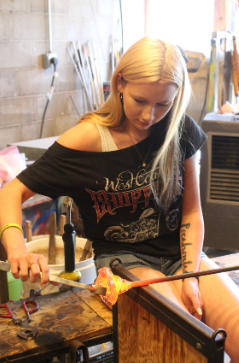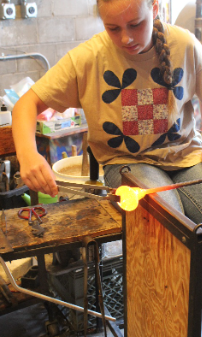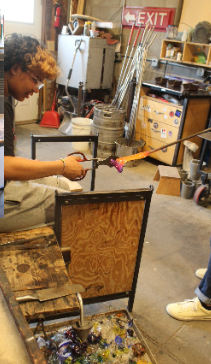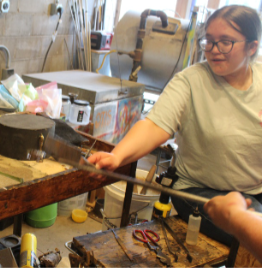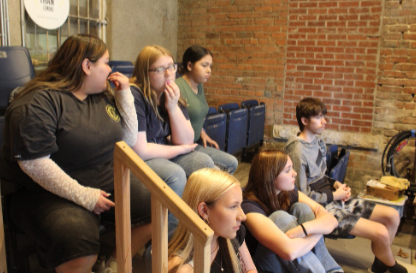
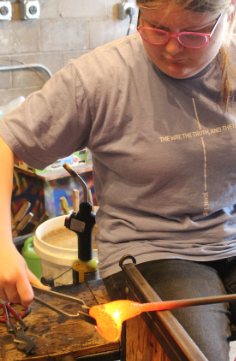
Horton High School art students participated in a five-hour workshop on Thursday, April 23 and Friday, April 24 learning about the history of glass blowing and glass-forming. Students learned about the origins of glass forming that traces back to ancient civilizations such as Mesopotamia around 1500 BCE, and later advancements during the Roman Empire, the practice of shaping molten glass has evolved into a powerful contemporary medium. Those students who participated in one of these workshops were able to offset their registration through a special fundraising opportunity. Students learned that the practice of shaping molten glass has evolved into a powerful contemporary medium by heating silica-based materials to extremely high temperatures—often exceeding 2,000°F—until the glass becomes molten and workable. Through techniques such as free-blowing, where molten glass is gathered on a blowpipe and inflated into vessels or sculptural forms, or kiln forming and casting, artists create textured, layered, and highly expressive works. Students studying glass forming unlocks essential artistic and career pathways. It teaches material science alongside design principles—understanding viscosity, thermal shock, and color chemistry—while honing problem-solving under time pressure, much like other studio practices. Exposure demystifies glass as an accessible medium through safer methods like fusing or slumping, inspiring careers in studio artistry, industrial design, or glass education. In programs like yours at USD 430 South Brown County, such lessons expand students' technical repertoires, foster innovation, and connect them to lucrative fields like architectural glass or custom fabrication, preparing them for creative professions where craftsmanship meets entrepreneurship.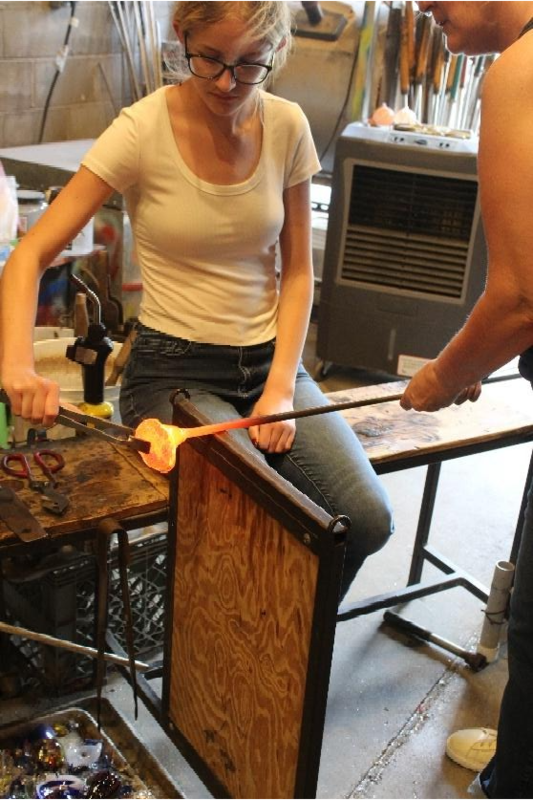
Glass blowing and forming represent dynamic art forms that fuse creativity, science, and masterful craftsmanship. With origins tracing back to ancient civilizations such as Mesopotamia around 1500 BCE, and later advancements during the Roman Empire, the practice of shaping molten glass has evolved into a powerful contemporary medium. Artists heat silica-based materials to extremely high temperatures—often exceeding 2,000°F—until the glass becomes molten and workable. Through techniques such as free-blowing, where molten glass is gathered on a blowpipe and inflated into vessels or sculptural forms, or kiln forming and casting, artists create textured, layered, and highly expressive works.
Horton High School Art Students gained valuable insight into both artistic practice and career pathways. It introduces students to new materials and processes while reinforcing design principles and creative problem-solving skills. Even when direct glassblowing is not accessible, techniques such as glass fusing or slumping can provide meaningful entry points into the medium. Recently, 17 local art students from USD 430 South Brown County participated in a hands-on glassblowing experience, gaining firsthand exposure to the techniques, tools, and creative processes used by professional artists. Experiences like this help demystify the medium and open doors to careers in studio art, industrial design, architectural glass, and custom fabrication.